Skincare · 8 min read
Gua Sha Facial Routine for Beginners: A 10-Minute Sculpting Ritual
How to use a gua sha tool at home to sculpt cheekbones, drain puffiness and boost lymphatic flow — in under ten minutes a day.
What gua sha actually does for your face
Gua sha is a centuries-old East-Asian bodywork technique adapted for the face. A smooth jade or quartz tool is glided across well-oiled skin to encourage lymphatic drainage, soften fascia and bring fresh, oxygenated blood to the surface. Done consistently, the practice can reduce puffiness, ease jaw tension and leave skin looking lifted within minutes.
Unlike a brisk body scrape, facial gua sha is gentle. The pressure should feel like petting a cat — firm enough to move the muscle, light enough that you'd never bruise. If you see redness, that's flushed circulation, not damage.
What you need before you begin
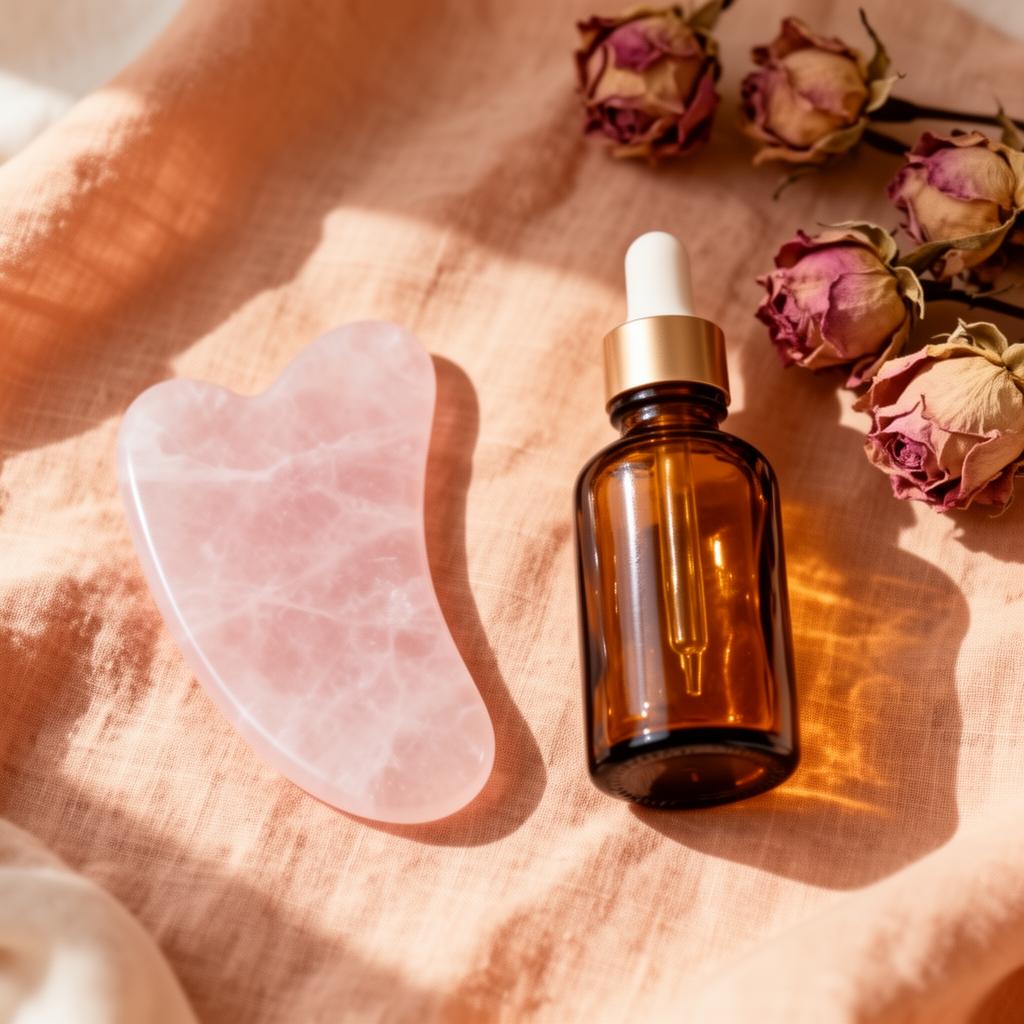
A gua sha tool with a wide curved edge that hugs the jawline (jade, rose quartz and stainless steel all work). A facial oil with enough slip — squalane, jojoba and rosehip are forgiving choices. Clean hands, a clean tool and five minutes where your phone is in another room.
Skip gua sha entirely if you have active acne, broken capillaries, sunburn or recent injectables. Wait at least two weeks after Botox or fillers and check with your provider.
The 10-minute morning routine, step by step
1. Cleanse and apply a generous layer of facial oil — more than feels normal. The tool should glide, never drag.
2. Start at the neck. Sweep the long edge of the tool downward from jaw to collarbone, three slow passes per side. This opens the lymphatic drainage path so everything you do above flows down.
3. Jawline: hook the curved notch under the jaw and sweep from chin to ear, three times each side.
4. Cheekbones: place the tool flat under the cheekbone and sweep up and out toward the temple. Five passes.
5. Under-eye: switch to the smallest curve and use feather-light pressure, sweeping from inner corner outward. Three passes only.
6. Forehead: sweep from brow to hairline in vertical strokes, then a final fan from the centre out to the temples.
Finish by holding the tool flat against the temples for ten seconds — it cools, calms and signals your nervous system that the ritual is complete.
How long until you see results
Depuffing is immediate — most people notice softer under-eyes and a sharper jawline the same morning. Lifting and tone changes are cumulative; commit to four weeks of daily practice before judging.
Frequently asked questions
- How often should I do gua sha?
- Daily for puffiness and morning drainage. Three to five times a week is plenty for sculpting and tone.
- Can gua sha replace Botox?
- No, but consistent practice softens expression lines, eases tension headaches and lifts the lower face naturally over months.
- Should I do gua sha morning or night?
- Mornings are best for depuffing. Evenings are best for jaw tension and stress release.